Root canal treatments in Vienna
Tooth preservation in cases of inflamed tooth interior
- Modern endodontic procedures allow for precise treatment of the tooth's interior using minimally invasive techniques.
- Mechanical preparation and digital diagnostics support the thorough cleaning of the root canals.
- Local anesthesia and structured treatment steps ensure the most pain-free therapy possible.
- Biocompatible materials stabilize the tooth and guarantee a tight seal of the canals.
If the tooth's interior is inflamed, targeted treatment can often save the natural tooth. At our dental practice in Vienna, our team uses modern endodontic procedures to remove bacteria from the root canal system and permanently stabilize the tooth. Precise diagnostics, mechanical instruments, and structured follow-up examinations support long-term tooth preservation.
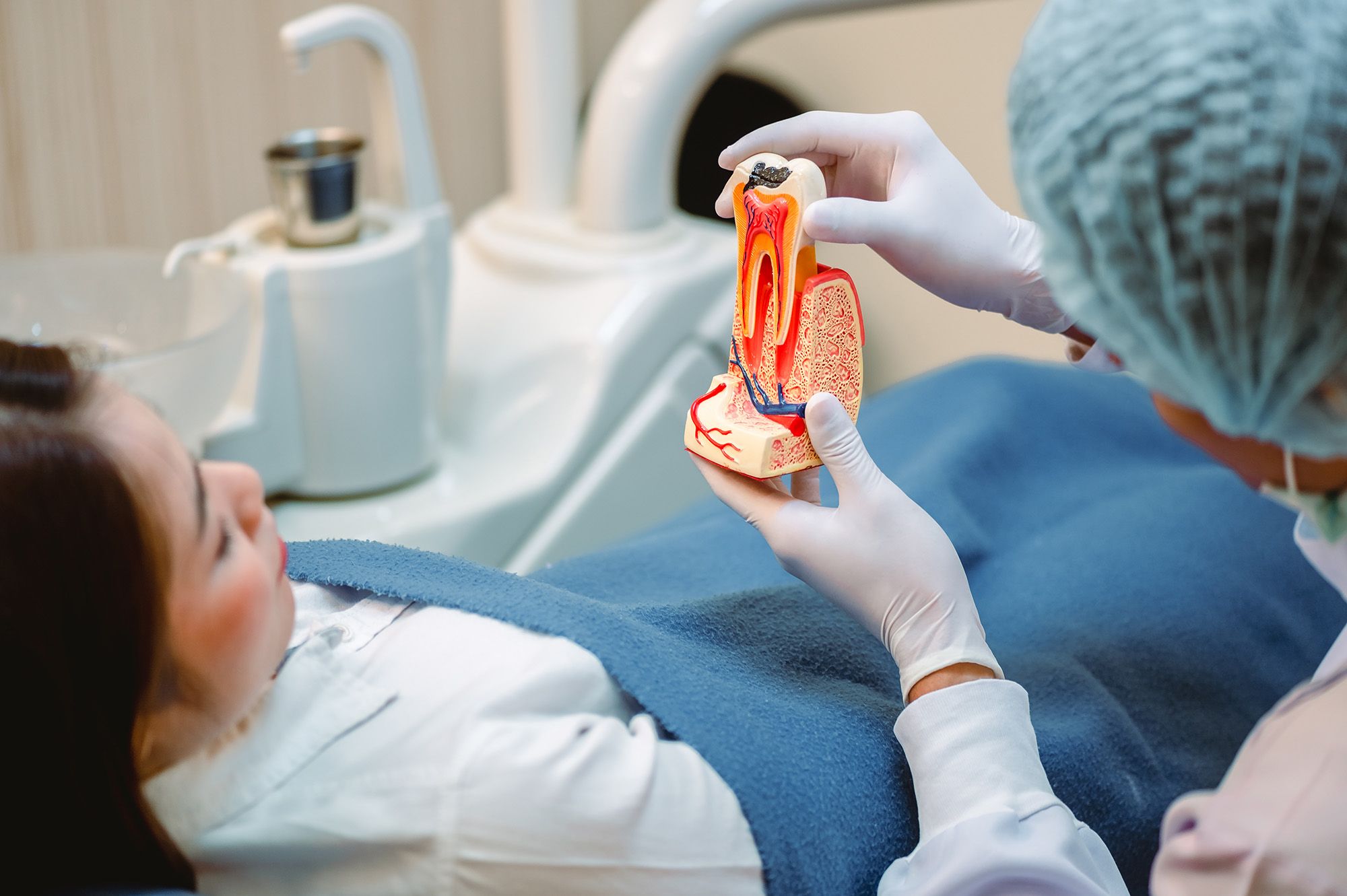


When the inside of the tooth is inflamed
how the tooth can be saved
Inflammation inside a tooth often results from deep tooth decay or bacterial infections. Without treatment, the inflammation can spread and cause severe pain. However, targeted therapy often allows the tooth to be saved.
Treatment is based on precise diagnostics and modern technology. Digital X-rays show the affected areas and help to accurately determine the length of the root canals. Electronic length measuring devices further support this planning.
During treatment, the canals are prepared with rotary instruments made of nickel-titanium. These flexible instruments allow for thorough cleaning, even in complex canal structures.
For added safety, the tooth is isolated with a rubber dam during treatment. This technique reduces the penetration of germs and creates controlled working conditions.
What does a root canal treatment entail?
Root canal treatment is a dental procedure used to treat inflamed or dead dental nerves. The inflamed tissue is removed from inside the tooth. The root canals are then thoroughly cleaned, disinfected, and tightly sealed. The goal is to preserve the natural tooth and prevent the infection from spreading.
Technical elements of the treatment
- Dental microscope for a precise view of fine canal structures
- Mechanical preparation systems for thorough cleaning
- Electronic length measuring systems for precise determination of canal length
- Modern disinfection solutions for effective germ reduction
- Biocompatible materials for permanent canal sealing
Schedule an appointment for an examination if you have tooth pain.
Treatment process step by step
Diagnostics and planning
Symptoms are analyzed and digital X-ray images are taken to pinpoint the exact location of the inflammation.
Cleaning of the sewer system
Inflamed tissue is removed. The root canals are thoroughly prepared using rotary instruments. Disinfection and sealing.
Disinfection and closure
The cleaned channels are disinfected and then tightly sealed with special materials.
Stabilization of the tooth
Depending on the initial situation, the tooth is either built up or protected long-term with a crown.
When is treatment of the inside of the tooth advisable – and when is it not?
The therapy aims to save a damaged tooth. Whether treatment is possible depends on the condition of the tooth structure.
Treatment is advisable if:
- inflammation inside the tooth is diagnosed
- severe toothache occurs
- the tooth is damaged by decay or infection
- the natural tooth should be preserved
Treatment is not advisable if:
- the tooth is severely structurally damaged
- stabilization is no longer medically possible
Root canal treatments in Vienna for long-term tooth preservation
During root canal treatment, we remove inflamed tissue from inside the tooth and stabilize it by cleaning and sealing the root canals. Precise diagnostics, modern instruments, and structured follow-up appointments are crucial for long-term tooth preservation.
Schedule an appointment for examination and treatment today.
Frequently asked questions about the treatment of inflamed teeth
Is treatment of the inside of a tooth painful?
Modern procedures are generally performed under effective local anesthesia. This usually makes the treatment virtually painless.
How long does such a treatment take?
The duration depends on the condition of the tooth and the number of root canals. In many cases, the treatment can be completed within one or two appointments.
Why is treatment better than tooth extraction?
The natural tooth is preserved and can continue to fulfill its function in the dentition. This also supports the stability of the entire dental arch.
What happens after the treatment?
Regular check-ups monitor the healing process. In some cases, the tooth is subsequently stabilized with a crown.
